 by
by
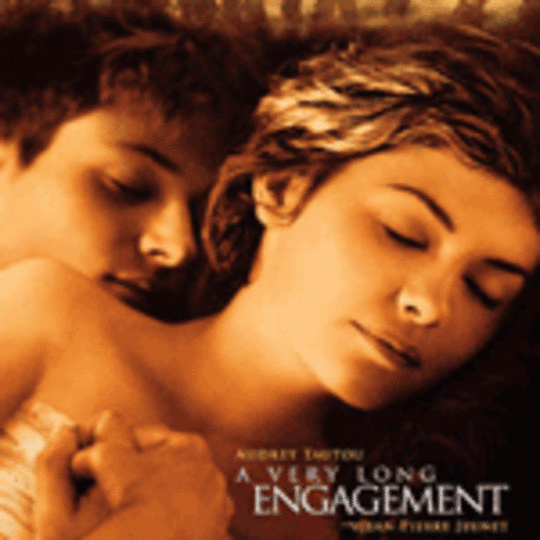
Most modern war films attempt to contrast happiness and romance with the horrors of war, but none with the intensity of this film. Perhaps it's because you warm so much to Jean-Pierre Jeunet's quirky, eccentric characters and idyllic rural picture that when some of those characters are thrown into the most pointlessly destructive war of all, it is truly gutting. Where 'Saving Private Ryan' tried to get you to feel disoriented and traumatised, here the film starts off by showing you a little of the pre-war lives of a group of soldiers and gets you to care for them enough so that when they are thrown into the trenches in 1917 you are never able to escape the depravity and pointless human destruction that earned that war the title 'Great'. While the blood and guts is just as graphic as it was in Spielberg's film, here we are also faced with old friends, old scores to settle and the shell-shocked battle psychosis of 'Regeneration'
The main body of this film is more concerned with what happens afterwards, with trying to patch together broken bones and broken bonds. We join our heroine Mathilde after the war in 1920, living with her aunt and uncle, semi crippled by the polio she had as a child, refusing to believe that her childhood friend and fianceé could have been killed, though the writing on the wall says just that, and embarking on a twisting turning wild goose chase to find the truth, by trying to find survivors who witnessed his final moments.

...got to _me_
A beautiful film comes to an end.
A tear-sodden heap has difficulty standing up straight and leaving in a dignified manner becoming of a gentleman.
-
9Chris Nettleton's Score