 by
by
Back in February, one DiS messageboarder was moved to say to the masses: “I challenge you to prove to me that math-rock is real”. Responses varied – some kept tongues in cheek, some were flippant, some were genuinely useful, pointing our curious poster in the direction of Piglet and Sharks Keep Moving. But neither of these acts have left impressions considerable on the development of a musical genre now elevated to buzz status thanks to the breakthrough of Foals and, a year before, Battles.
The roots of math-rock – which categorically does exist, that man – go deep; indeed, it’s possible to trace the veins back to Steve Reich and Johns* Cage* and* Zorn, should the mood take. It doesn’t, though (although if anyone wants to begin at *Nomeansno, be my guest here) so let’s begin where so many did: in Kentucky, in the 1980s.
Slint: This Louisville three-piece – David Pajo, Brian McMahan and Todd Brashear were present on the recording of their 1991 high watermark Spiderland – formed in 1986, and their influence on math-related sub-genres of all forms can’t be in doubt (in terms of bands, look no further than June Of 44, MySpace, who in turn definitely had some influence on Botch’s quieter moments – more later). Instrumental music seeped in dramatic tension but set to rigid systems of solid-structured guitar patterns and percussive repetition, theirs was a sound tough to digest at the time, but one that now sounds dated by developments within the field. Despite disbanding in 1991, after Spiderland (the band’s other long-player, Tweez, was a rather mixed bag of improvised pieces that is notable only for its Steve Albini production credit: he’s listed as “Some Fuckin' Derd Niffer”; a 1994 EP, Glenn/Rhoda, otherwise known as an untitled or self-titled two-tracker, is worth investment though; find the tracks on MySpace), Slint’s presence continued to be felt throughout math- and post-rock circles, and they reformed in 2005. They continue to play live to this day, but new recordings aren’t exactly racing over the horizon line.
If you buy only one record: Spiderland is, even now, a phenomenal release, and one that’s truly essential to the fabric of math-rock. Rarely are ‘landmark’ albums worth revisiting once techniques fascinating at the time are repeated into familiarity, but this is definitely worthy of investigation by math newcomers.
Shellac: Steve Albini’s own band at the time of his working with Slint (1987), Big Black, were a notoriously noisy proposition that retains fans to this day. Rapeman followed, releasing one album and an EP, but it was with Shellac (MySpace) that the producer found his loudest voice, alongside bassist Bob Weston and drummer Todd Trainer. Since 1992 the Chicago* trio’s awkward time signatures and trademark aggression has come to characterise a certain slant on math-rock – this is vitriolic and acerbic, yet compositionally taut and adventurous. Identifiable additionally due to Albini’s preference for Travis Bean aluminium guitars – heavy enough to necessitate a waist harness as well as the customary over-the-shoulder strap – the band’s output is opinion splitting in its ferocity, but undeniably influential in its unprecedented formula. Like many acts associated with math-rock, Shellac distance themselves to some respect from the genre by merely summarising their formation as a ‘minimalist rock trio’. Truth be told, a racket this deafening could never be considered ‘minimalist’.
If you buy only one record: While 1994’s At Action Park was superbly received, it’s the band’s third album 1000 Hurts, released in 2000, that makes for the easiest point of entry. Well, I say ‘easiest’ – ‘Prayer To God’ is as pant-shittingly brutal an opener as you’ll anything ever hear.
Video: Shellac, 'Steady As She Goes'
- Geographically speaking, Chicago and the Mid West is of huge importance to the progression of math-rock – as well as Shellac, similarly minded acts from the city include U.S. Maple (MySpace), whose 2007 disbanding was met by no little mourning amongst fans of weirdly-crooned experimentalism (check out their Acre Thrills LP of 2001), and 90 Day Men (MySpace), who moved to the city after forming in St Louis and whose 2004 album Panda Park, under-appreciated at the time of its release, is a wonderfully cinematic take on math-rock custom signatures. Further listening, in a similar vein: Bastro (MySpace), who would later re-emerge as the hugely influential Gastr del Sol (MySpace), and* Shipping News* (MySpace).

Cap'N Jazz
Cap’N Jazz: A slight diversion, if you’ll indulge me, but sticking to our Chicago surroundings. Forming in 1989, the Tim Kinsella-led Cap’N Jazz (MySpace) released one ridiculously-titled LP (let’s simply call it Burritos for the sake of the word count) and a slew of sevens, ultimately calling it quits in 1995. And it’s what followed that’s of most interest here: Kinsella and brother Mike were founder members of the still-active Joan Of Arc (MySpace), a band whose motifs are absolutely in keeping with math-rock’s habitual guitar twitchiness. In turn, Joan Of Arc led to Make Believe (MySpace), and Tim and Mike got the old Cap’N Jazz line-up back together in 2001 to record the album Owls as Owls. Confused? You should be – I am and I own these records. Despite not sticking rigidly to what is today considered math-rock, Tim Kinsella’s guitar arrangements – both effortless angular and immediately engrossing – have certainly been heard by Foals’ twin six-stringers. Check out the man’s amazing catalogue on Wikipedia.
If you buy only one record: Cap’N Jazz’s two-disc compilation, Analphabetapolothology, is a must-have; Joan Of Arc’s catalogue is patchier given its wider scale, but 2003’s So Much Staying Alive And Lovelessness is an ideal starting point, or How Memory Works (1998) if you’re up for delving that bit further into the band’s past. All three are available via Jade Tree, as is Owls, worth the money if either Joan Of Arc recommendation appeals, but perhaps isn’t an ideal acquirement if it’s the boisterous quirk-pop of Cap’N Jazz that clicks.

Don Caballero
Don Caballero: Mainstays of Chicago stable Touch & Go until their 2000 demise – although drummer Damon Che formed a new ‘Don Caballero’ in 2003, which released the so-so World Class Listening Problem via Relapse in 2006 and is set to follow that with Punkgasm this summer – Pittsburgh’s Don Caballero (MySpace), like Shellac, were known to dislike the math-rock tag that featured prominently in reviews of their first four LPs, but it takes a wild imagination to not conclude that debut For Respect is a cornerstone of the genre, featuring both Steve Albini on production duties and Ian Williams on guitar, although the future Battles man would only make his presence truly felt on Don Cab’s second album, Don Caballero 2 (1995). Stop-start rhythms and syncopated blasts of percussion – Che is the master of this approach to drumming – identify the band’s material past and present as being of a math nature, and it’s clear to hear the connection between it and recent output by Foals, as well as the two albums to date from Chicago’s Russian Circles (MySpace).
If you buy only one record: It’s a toss up for me between albums one and two – both are fine introductions to a band whose influence on the likes of Battles and Foals, and subsequently acts inspired by such modern purveyors of math-rock, is absolutely evident. Ian Williams, ex-Don Cab, is even in Battles. D’uh.
Video: Botch, 'Saint Matthew Returns To The Womb'
Another small diversion, please: Don Cab’s influence (and that of their instrumental peers) reached beyond math-rock purists, informing a number of more metal-tinged acts. Tacoma’s Botch (1993-2002, MySpace) adapted the complex riff patterns for the heavier end of the rock spectrum, inventing ‘mathcore’ in the process, or ‘math metal’ if you like; their We Are The Romans LP of 1999 (review) is rightly regarded as one of the greatest albums of its kind – powerful, passionate and absolutely mind-blowing in terms of captured aggression and technical artistry. The album’s producer Matt Bayles and band guitarist Dave Knudson would later form Minus The Bear, but more on them later. Also taking cues from math-rock in their early years were New Jersey’s The Dillinger Escape Plan (MySpace). Their Calculating Infinity album of 1999 should be your next purchase after Botch’s seminal work – mind-bendingly complicated of riff, it’s the ‘fan favourite’ despite Dillinger’s superb refining of their initial sound, realised brilliantly on the pop-infected perfection of last year’s Ire Works (review). Mathcore further listening: Since By Man (MySpace); Converge (MySpace); *Coalesce *(MySpace); *Between The Buried And Me *(MySpace)… more.

The Locust
The Locust: Bear with me here… The Locust (MySpace) might initially seem more connected to Botch and The Dillinger Escape Plan than any ‘typical’ math-rock, given their confrontational cacophonies, but listen closer to those out-there signatures and it’s clear the group have been touched by the influence of more traditional exponents. Jimmy LaValle played guitar in the band from 1996 to ’98, leaving to form the definitely math-rock echoing Tristeza (MySpace), an act merging math schooling with post-rock sensibilities; he then ‘became’ The Album Leaf, distanced from math-rock almost completely. Other members have enjoyed associations with Some Girls (less math, more monstrous punk noise, MySpace), Cattle Decapitation (gory math metal, MySpace) and Head Wound City (scrappy punk also featuring members of The Blood Brothers and Yeah Yeah Yeahs, MySpace), stretching math-rock’s influence into scenes you’d never usually associate with the seemingly fairly insular genre. So, The Locust are carriers of the math-rock gene – it’s not always evident in their output, and absolutely not in the output of related acts, but overtones penetrate the squall all the same.
If you buy only one record: Plague Soundscapes (2003, review) is 21 minutes (and 23 tracks) of head-spinning insanity excess. NME famously awarded the album a 10/10 score. Somehow you can’t imagine that happening today.
Video: The Locust, 'Live From The Russian Compound'
- -

Rothko
Rothko: Totally at the opposite end of any math-rock spectrum to The Locust are London’s Rothko (MySpace) – an ambient instrumental group considered to incorporate elements of math-rock by a number of critics. Repetition plays its part, and there’s little here that matches styles commonly associated with conventional contemporary post-rock; everything’s structured so very so_, and it’s this level of attention to detail that finds Rothko mentioned here. Boasting an impressive catalogue, growing steadily and surely since their 1997 formation, the quartet share atmospheric similarities with LaValle’s Tristeza (if you’re to buy one of their releases, make it _Spine & Sensory, released in re-mastered form in 2004) – math-rock to relax to rather than shake yourself silly in time with. There’s no doubt the influence of Slint plays its part on the band’s recordings, too, as a certain eeriness creeps through the noise with no little irregularity; Belfast's Tracer AMC (MySpace) are among the acts quite probably influenced_ by _Rothko.
If you buy only one record: In The Pulse Of An Artery (2001) is among the most beautiful instrumental LPs you could hope to own.

Battles
Battles: Skipping forwards from Don Cab’s inspirational instrumentals but bypassing the mathcore tributary, New Yorkers Battles were Foals’ forerunners in terms of presenting math-rock to the masses, as television appearances projected tracks from their debut album proper Mirrored (review) into the homes of many unfamiliar converts. Featuring members of Don Cab and not-math-at-all rockers Helmet, the four-piece were initially regarded as a sort of supergroup; now established on their own terms, criss-crossing polyrhythms pride of place on many a festival bill (see them this summer at the DiS-sponsored Supersonic Festival), the band are recognised globally as leading the latest math-rock charge, however much they try to describe themselves as anything else. Why the bad rep, though? Everything above is, basically, neat.
If you buy only one record: The EPs showcase the band’s formative forays into brave new compositional territories, but Mirrored (2007) is a must-have regardless of your opinions on any aforementioned math-rockers here. It’s simply a great LP, one of the best of last year if not the best.
Video: Minus The Bear, 'Knights'
- -
Before we get to Foals – nearly there (forgive me a lack of complete comprehensiveness in this here history, please – there are only so many hours in the day) – time for a brief focus on math-pop. Minus The Bear formed in Seattle in 2001, with members previously serving time in post-hardcore outfit Kill Sadie as well as the previously mentioned Botch and Sharks Keep Moving. Combining math-rock rhythms with a definite pop edge, they’re perhaps the middle ground between Battles’ instrumental Rubik’s Cube and Foals’ more immediate Guess Who alt-rock – personality split several ways but with songs always featuring catchy hooks. Newcomers to the band – who display colours also comparable to the hyperactive indie-rock of Bloc Party and Q And Not U – should begin at the beginning, with 2002’s Highly Refined Pirates. Slightly more complex but no less grabbing are Maps & Atlases (MySpace), from (surprise, surprise) Chicago, whose material echoes both the rabid fretboard workouts and vocal histrionics of Tim Kinsella and also the clipped notes and ferocious percussion of Battles. Clicking further, from the ADHD pop-rock of Maps & Atlases, you can visit St Louis’ (spotting geographical themes here?) So Many Dynamos (MySpace), the slightly straighter-faced math-rock fallout of We Versus The Shark (MySpace), Denver-based math-poppers The Photo Atlas (MySpace), Californian headache-inducers Tera Melos (MySpace), and Oxford’s This Town Needs Guns (MySpace). Which brings us quite nicely to our concluding act.

Foals
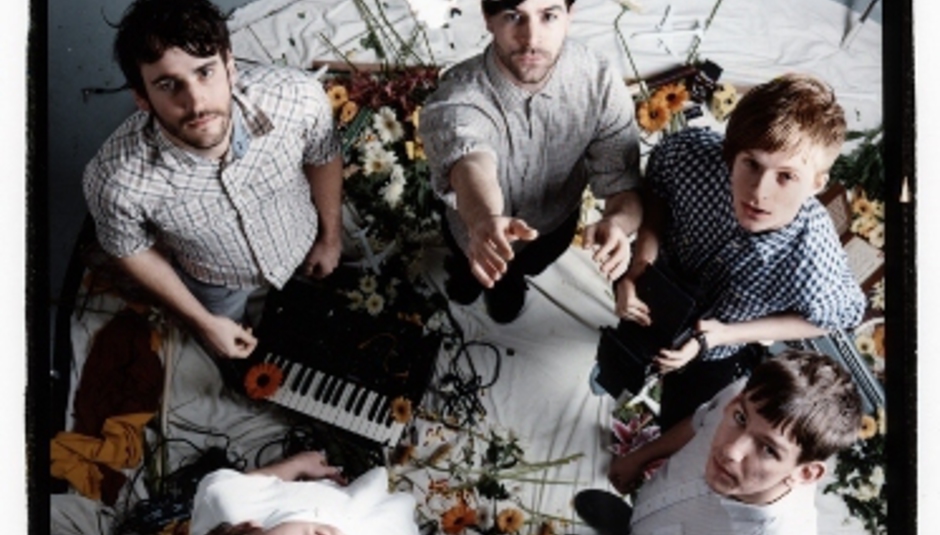
Foals: You know, the ones from Skins… but so very much more. Partially the recipients of some unfortunate backlash given their over-exposure ahead of debut album Antidotes, Foals perhaps don’t get the kudos they’re owed for making math-rock such a eminently droppable term in standard muso/industry conversation. The Oxford five-piece – formed from the ashes of overly-fiddly sorts The Edmund Fitzgerald and inspired in part by fellow townsfolk Youthmovies, who themselves cite Steve Reich as an influence (see, this shit’s circular) – look set to continue their rise throughout 2008, as October live dates edge closer to being sold out and further singles are scheduled for release following the pre-album one-two of ‘Balloons’ and ‘Cassius’. Expect the likes of Pennines (MySpace), Great Eskimo Hoax (MySpace), *Pulled Apart By Horses *(MySpace), the already mentioned This Town Needs Guns and more to attract considerably more attention to their similarly-hued brands of math-rock in the wake of Foals’ commercial success. I’ve no complaints about that, whatsoever.
If you buy only one record: Antidotes is the band’s debut album, and widely available. As this review hopefully suggests, it’s well worth the £6.99 or whatever it’s going for in HMV.
Video: Foals, 'Cassius'
And there ends our quick-fire, quick-fix, skip-a-few journey through the history of math-rock. See, it does exist, not that we've really concluded exactly what it is. The only certainty: it will continue morphing and twisting, goalposts always on the move, in the same way as post-hardcore, emo, everything before it. Enjoy the ride.